

28
Aug
6 Fire Restoration Challenges Tampa Homeowners Face (And How We Handle Them)
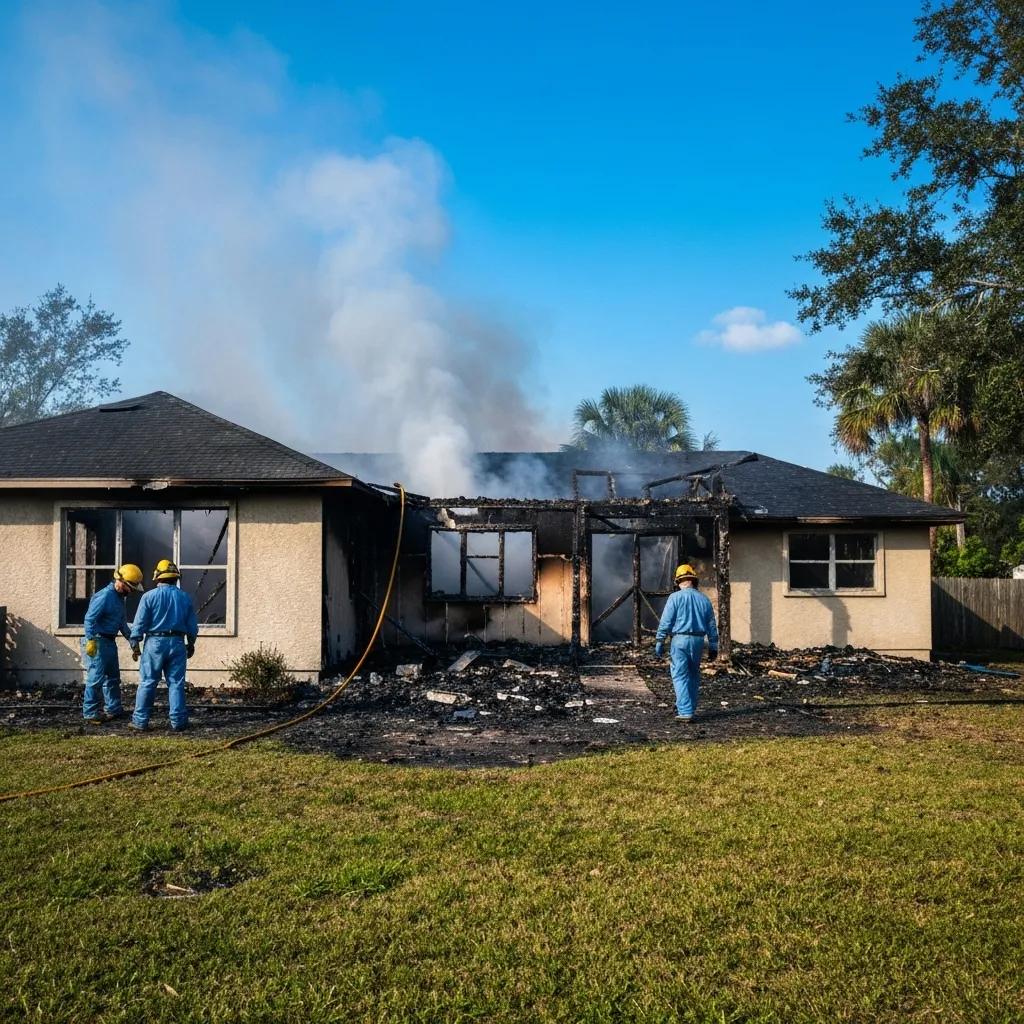
When fire strikes your Tampa home, the flames themselves are only the beginning of the challenge. What many homeowners don’t realize until they’re standing in the aftermath is that fire restoration involves a complex web of technical problems—from soot that has infiltrated your HVAC system to structural damage hidden beneath layers of smoke residue. Understanding these fire restoration challenges Tampa homeowners face can help you recognize why professional expertise isn’t just helpful—it’s essential. For local help, see fire damage restoration Tampa.
At 911 Restoration of Tampa Bay, we’ve spent years navigating the unique complications that fire damage creates in Gulf Coast homes, and we know that every fire restoration project tells a different story of technical obstacles that must be overcome.
Challenge #1: Soot and Smoke Penetration Into HVAC Systems
One of the most insidious fire restoration challenges Tampa homeowners encounter is the way soot particles travel through forced-air HVAC systems. During a fire, smoke doesn’t just rise—it gets pulled into return air vents and distributed throughout your entire ductwork network.
In Tampa Bay’s climate, where air conditioning runs nearly year-round, your HVAC system becomes a highway for contamination. Even if the fire was contained to a single room, soot particles measuring less than 2.5 microns can circulate to every corner of your home. These particles settle on surfaces, embed in fabrics, and continue releasing acidic residues and odors long after the fire is extinguished.
Our restoration approach involves:
- Complete HVAC inspection and camera documentation of ductwork contamination
- Professional duct cleaning using HEPA-filtered negative air machines
- Replacement of air filters, and in severe cases, contaminated ductwork sections
- Air scrubbing throughout the restoration process to prevent cross-contamination
- Post-restoration air quality testing to verify the system is clean
We coordinate closely with HVAC specialists who understand that Florida’s humidity creates additional complications—moisture interacts with acidic soot to accelerate corrosion of metal ductwork and components. This technical challenge requires expertise that goes far beyond basic cleaning.
Challenge #2: Smoke Odor Embedded in Porous Building Materials
Tampa’s older homes—particularly in neighborhoods like Seminole Heights, Hyde Park, and the historic areas of St. Petersburg—often feature construction materials that are especially vulnerable to smoke odor absorption. Wood framing, plaster walls, concrete block (common in mid-century Florida construction), and terrazzo flooring all act like sponges for smoke particles.
The challenge intensifies because different materials burned in the fire create different types of smoke with varying chemical compositions:
| Material Burned | Smoke Characteristics | Restoration Challenge |
|---|---|---|
| Natural fibers (wood, paper) | Dry, powdery residue | Deep penetration into porous surfaces |
| Synthetic materials (plastics, polyester) | Sticky, petroleum-based residue | Smearing during cleaning; requires specialized solvents |
| Protein-based (cooking fires) | Greasy, strong odor | Nearly invisible but pungent; discolors varnished surfaces |
| Electronics and wiring | Acidic, corrosive | Damages metals and continues etching after fire |
Our technical approach to this fire restoration challenge in Tampa involves thermal fogging, ozone treatment (in unoccupied spaces with proper safety protocols), hydroxyl generation, and in some cases, sealing affected materials with specialized primers before reconstruction. We also assess whether materials like insulation, drywall backing, or subflooring have absorbed so much odor that removal and replacement is the only viable solution.
The humidity in Tampa Bay—averaging 74% annually—means that porous materials already contain moisture that helps smoke particles penetrate even deeper. This isn’t a challenge you can solve with air fresheners or surface cleaning.
Challenge #3: Structural Integrity Compromised by Fire Suppression Water
Here’s an irony Tampa homeowners face: the water used to save your home from fire often creates secondary damage that rivals the fire itself. When firefighters suppress a residential fire, they typically discharge hundreds to thousands of gallons of water—and that water has to go somewhere.
In Tampa’s typical single-story concrete block construction with wood truss roofing, water follows predictable but problematic paths. It saturates attic insulation, runs down inside wall cavities, pools on floors, and seeps into subflooring. Our water damage restoration Tampa expertise becomes critical during fire restoration projects.
The technical challenges include:
- Hidden saturation: Moisture meters and thermal imaging cameras reveal water trapped in places visual inspection misses—inside walls, beneath tile, within structural members
- Rapid mold growth: Tampa’s warm climate means mold can begin colonizing within 24-48 hours; fire-damaged materials with compromised surfaces are even more vulnerable
- Structural load concerns: Water-saturated insulation and building materials become extremely heavy, potentially stressing roof trusses or ceiling joists already weakened by fire
- Electrical hazards: Water and soot create conductive paths that make electrical systems dangerous until properly inspected and dried
We deploy commercial-grade extraction equipment, structural drying systems, and dehumidification within hours of getting the call at (813) 261-1525. Our technicians document moisture readings throughout the drying process, because insurance adjusters need proof that proper mitigation occurred—and your family needs assurance that hidden moisture won’t cause problems months later.
This is also where our mold removal Tampa capabilities intersect with fire restoration, creating a comprehensive approach to the overlapping damage categories.
Challenge #4: Navigating Insurance Adjuster Expectations and Documentation
One of the most stressful fire restoration challenges Tampa homeowners face has nothing to do with soot or structure—it’s dealing with insurance claim complexity. Insurance adjusters work from protocols and documentation requirements that most homeowners have never encountered.
The technical challenge here is creating a scope of work that:
- Accurately reflects all direct fire damage, smoke migration, and water damage from suppression
- Distinguishes between emergency mitigation (immediate protective measures) and restoration (rebuilding)
- Provides photographic and written documentation that supports the claim
- Accounts for code upgrade requirements when restoring older Tampa homes to current Florida Building Code standards
- Addresses contents cleaning and storage separately from structural restoration
We’ve worked with virtually every insurance carrier operating in Hillsborough and Pinellas Counties. Our estimating software integrates with insurance industry databases, and our project managers understand how to communicate findings in terms adjusters recognize and accept. You can learn more about our approach on our insurance assistance page.
When you call us at (813) 261-1525, we can often coordinate a joint inspection with your adjuster, which streamlines the documentation process and reduces the back-and-forth that delays restoration. We’re not public adjusters—we’re restoration contractors who understand the technical language insurance requires.
Challenge #5: Content vs. Structure Restoration Decisions
After a fire, Tampa homeowners face heartbreaking decisions: what can be saved, and what must go? This fire restoration challenge combines technical assessment with emotional weight, and it requires specialized knowledge to make informed choices.
The technical evaluation involves:
- Heat exposure assessment: Items near the fire may have heat damage that isn’t immediately visible—plastics that have off-gassed, electronics with melted components, or wooden furniture with internal char
- Smoke contamination level: Porous contents like upholstered furniture, mattresses, clothing, and books absorb smoke differently based on proximity and duration of exposure
- Water damage from suppression: What fire didn’t destroy, water may have—important for electronics, paper documents, photographs, and wood furniture
- Restoration viability: Some items cost more to restore than replace; others have sentimental value that justifies extraordinary restoration efforts
We work with specialized contents restoration facilities that use ultrasonic cleaning, ozone chambers, and document freeze-drying. For structural elements—cabinetry, built-in shelving, architectural details in historic Tampa homes—we assess whether refinishing and sealing is viable or if replacement is necessary.
This challenge intersects with insurance coverage, because policies typically have different limits and deductibles for contents versus dwelling. Our detailed inventory and condition assessment helps you and your adjuster make informed decisions about what restoration approach makes sense.
Challenge #6: Coordinating Multi-Trade Reconstruction in Fire-Damaged Tampa Homes
The final technical challenge is one many homeowners don’t anticipate: fire restoration isn’t a single trade job. It requires coordination among multiple specialists—environmental remediation, structural drying, demolition, electrical, plumbing, HVAC, framing, drywall, painting, flooring, and finishing trades.
In Tampa’s active construction market, scheduling these trades in the proper sequence while maintaining quality control requires project management expertise. The technical challenges include:
- Ensuring complete mitigation and cleaning before reconstruction begins (you can’t seal contamination behind new walls)
- Coordinating electrical and plumbing inspections with Hillsborough or Pinellas County building departments
- Managing lead paint and asbestos concerns in older Tampa homes (common in pre-1978 construction)
- Matching materials in partial restorations—flooring, cabinetry, fixtures that may be discontinued
- Preventing secondary damage during reconstruction (dust control, climate control, security)
Our approach at 911 Restoration of Tampa Bay involves a dedicated project manager who serves as your single point of contact throughout the restoration. We also handle related issues like sewage cleanup Tampa services if plumbing was damaged, creating a truly comprehensive restoration solution.
This coordination extends to working with your mortgage company if escrowed insurance proceeds are involved, scheduling inspections at appropriate milestones, and keeping you informed of progress even when you’re temporarily relocated.
Why Technical Expertise Matters in Tampa Fire Restoration
These fire restoration challenges Tampa homeowners face aren’t theoretical—they’re the real-world complications we navigate on every project. The Gulf Coast climate, Florida building codes, insurance requirements, and the technical complexity of fire damage science all intersect to create scenarios that require specialized knowledge.
Attempting DIY restoration or hiring a general contractor without fire damage expertise often leads to problems that don’t surface until months later: persistent odors, failed inspections, mold growth, insurance claim disputes, or incomplete restoration that affects your home’s value and your family’s health.
Our team holds IICRC certifications in fire and smoke restoration, water damage restoration, and applied structural drying. We invest in ongoing training because the science and technology of restoration constantly evolve. When you’re facing the overwhelming aftermath of a fire, that expertise translates into faster recovery, more thorough restoration, and fewer long-term complications.
Get Expert Help With Your Tampa Fire Restoration Challenges
If your Tampa Bay home has experienced fire damage, you’re facing technical challenges that require immediate, expert attention. Every hour of delay allows soot to cause more corrosion, water to penetrate deeper into materials, and odors to become more embedded.
911 Restoration of Tampa Bay responds 24/7 to fire damage emergencies throughout Hillsborough and Pinellas Counties. Our fire damage restoration Tampa team will assess your specific situation, begin immediate mitigation to prevent further damage, document everything for your insurance claim, and guide you through each phase of restoration.
Don’t navigate these complex fire restoration challenges alone. Call us at (813) 261-1525 or contact us online for immediate assistance. We’ll bring technical expertise, compassionate service, and proven systems to help you reclaim your home and your peace of mind after fire damage.
Latest Posts
Contact Us
For Advice
Need help? Talk to an expert
(813) 261-1525