Quick answer: Fire damage restoration in Brandon, FL averages $3,500 to $55,000 per residential job and must begin within 24 hours because soot becomes acidic and starts etching glass, metal, and finished surfaces. 911 Restoration of Tampa Bay dispatches IICRC FSRT-certified crews across Brandon ZIP codes 33510, 33511, and the surrounding Bloomingdale and Valrico edge with a 45-minute arrival commitment, 24/7. We handle board-up, structural drying, soot and smoke removal, odor neutralization, contents pack-out, and direct insurance billing. Call (813) 261-1525.
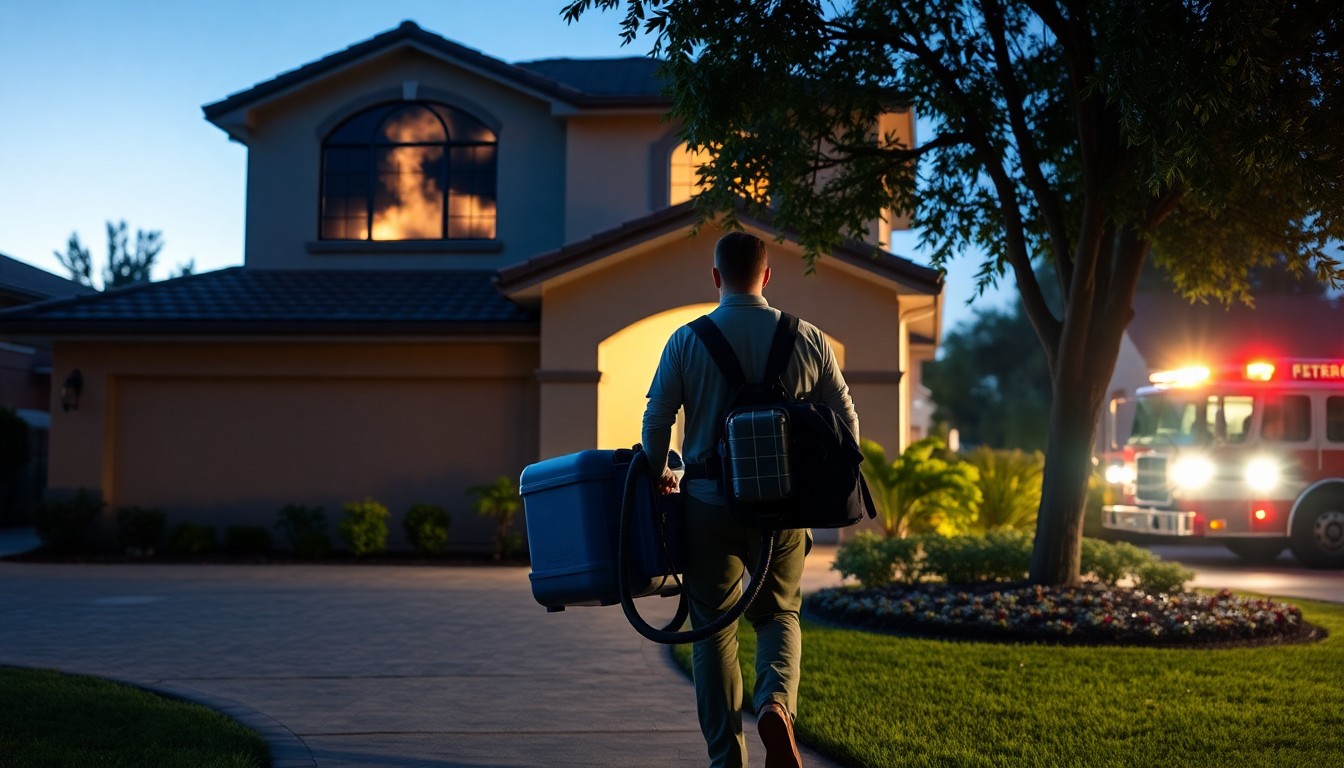
First-response fire damage assessment at a Brandon, FL home.
Brandon sits squarely in the path of two restoration pressures that intersect badly: Hillsborough County’s high-density 1980s and 1990s housing stock, and Florida’s year-round 70%-plus humidity. When a fire happens in a Brandon home, the second pressure starts working against the first within hours. Soot turns acidic, drywall absorbs water from firefighting, and the same humidity that grows mold on a normal Tuesday accelerates secondary damage on any home with broken windows or a missing roof section.
911 Restoration of Tampa Bay has restored Brandon homes since well before the Brandon Town Center expansion brought the current wave of growth. We are IICRC-certified, Florida-licensed, and dispatched out of Tampa with crews who know the difference between a Providence Lakes mid-90s build and a Hickory Lake Estates 1970s ranch. Both burn differently. Both need different scopes.
The Brandon difference: why local restoration experience matters
Brandon is denser and older than its eastern neighbors (Valrico, Lithia) and considerably older than Riverview. The implications for a fire job:
Building age and methods. Roughly half of Brandon’s single-family inventory was built between 1975 and 1995. That means dimensional lumber framing (good in fire), original aluminum branch wiring in some 1970s neighborhoods (high fire-cause risk, complicates rebuild), popcorn ceilings still present in many homes (asbestos testing required before demolition above 1% friable content), and original HVAC systems that have absorbed two to four decades of dust. When smoke reaches an HVAC system that old, it does not just need cleaning. Often it needs replacement.
Hillsborough County Fire Rescue. Brandon is served primarily by HCFR Stations 1, 17, and 23, with Bloomingdale’s Station 19 covering the southeast. Brandon’s downtown core has 4 to 7 minute response times. The west side near I-75 and the John Sparkman Theatre area runs about the same. Newer homes in Providence Lakes can see longer responses depending on the gate situation.
Lightning. Hillsborough County leads the United States in lightning strikes per square mile. Brandon’s older home inventory means more aging panels and more original wiring vulnerable to surge events. We see a consistent uptick in electrical-cause fires during the June through September storm season, especially in the Hickory Lake Estates, Valrico Hills (which is technically Valrico but borders Brandon), and Brandon Pointe areas.
What to do in the first hours after a Brandon house fire
The order matters. Doing step three before step two costs Brandon homeowners thousands every year.
Stay out until HCFR releases the scene. Even after the visible fire is out, structural collapse, smoldering, and CO levels are real risks. Wait for clearance.
Call your insurance carrier. Most Florida HO-3 policies require notice “as soon as practicable.” Get a claim number opened the same day.
Call a restoration company. This is the call most homeowners miss. The adjuster typically arrives in 24 to 72 hours. During that gap, soot acidity is climbing, water is wicking into framing, and you (not the insurer) are responsible for securing the home and stopping additional damage.
Photograph and video before anything moves. Every room, every angle, every closet. The carrier may also send a contents specialist later.
Approve emergency mitigation. Board-up, tarp-over, water extraction, HEPA filtration. This is generally covered under the same fire peril even before the larger claim is approved.
Brandon homeowners can reach our dispatcher 24/7 at (813) 261-1525. Average dispatch-to-arrival across 33510 and 33511 is 35 to 45 minutes.
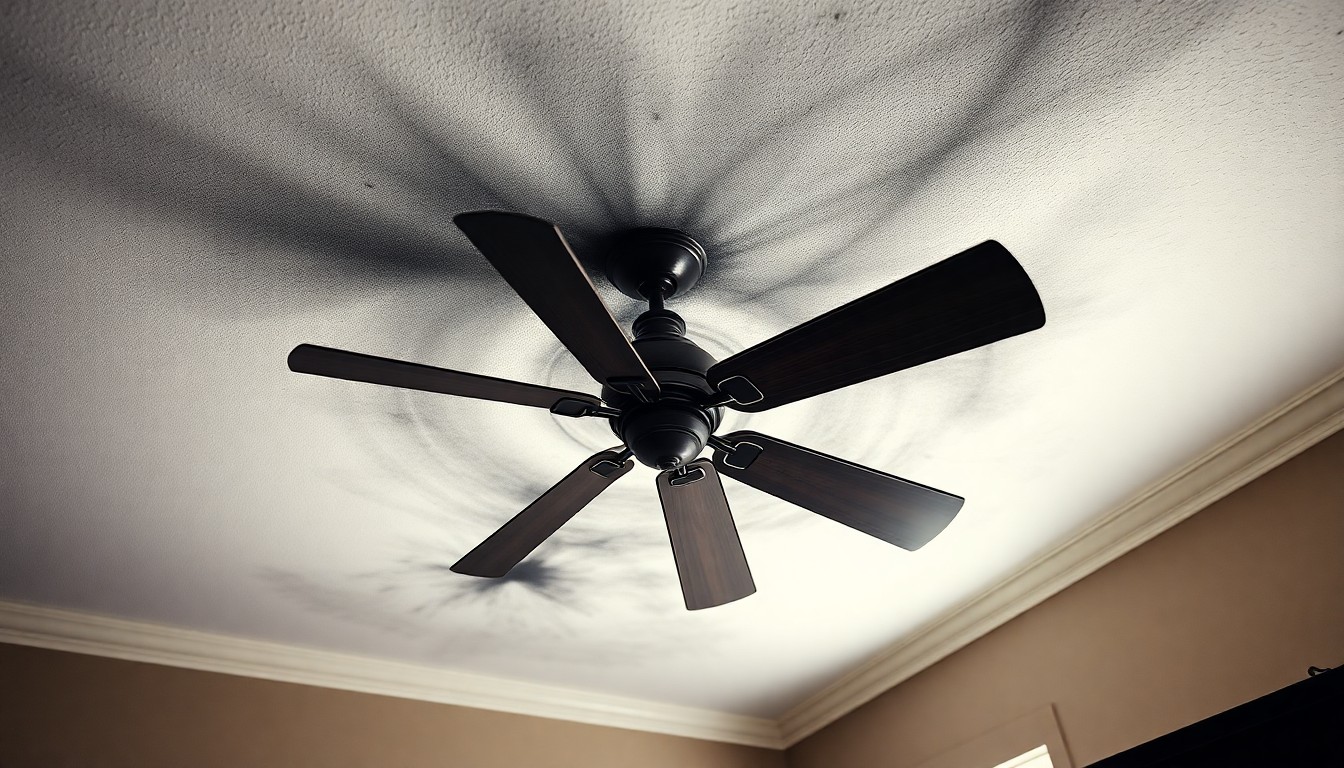
Ceiling fans pull smoke into characteristic radial patterns.
How acidic soot wrecks a Brandon home in 48 hours
Most people picture soot as black dust. It is not. Smoke residue is a chemical cocktail that varies by what burned: paint, vinyl flooring, polyurethane furniture, electronics, kitchen oils. Within 24 hours, that cocktail begins reacting with moisture in the air (which, in Brandon, is significant) to form acidic compounds.
What that acidity does, hour by hour:
Hour 0 to 12: Soot is mostly dust. Easily cleanable from most surfaces.
Hour 12 to 24: Yellowing begins on white surfaces (refrigerators, washers, painted trim). Brass and copper fixtures start tarnishing. Plastic appliance housings begin discoloring.
Hour 24 to 72: Glass and mirrors permanently etch. Chrome plumbing fixtures pit. Marble and grout absorb residue. Wood finishes haze.
Day 3 to 7: Drywall absorbs residue deep enough to require sealing-plus-paint rather than simple cleaning. Soft contents become harder to restore.
Week 2 plus: Many materials cross the threshold from “cleanable” to “replace.”
This timeline is why the gap between “fire is out” and “restoration starts” is so expensive. Every day waited is real money added to the claim.
Our IICRC-compliant fire restoration process for Brandon homes
Step 1: Assessment and scope
A lead technician walks the home with you (when safe) and documents every affected area. Photo and video documentation. Moisture mapping. Soot pattern analysis to determine fire origin and smoke travel paths. Initial Xactimate estimate produced within 24 to 48 hours.
Step 2: Structural board-up and tarp-over
Within hours of dispatch. Plywood over broken openings, tarp over compromised roof sections, security check of the perimeter. Florida statute and most carriers require this within 24 hours to preserve coverage.
Step 3: Water extraction and drying
Firefighting water is measured in hundreds to thousands of gallons even on small fires. We extract standing water, set air movers and dehumidifiers, and monitor moisture readings daily per IICRC S500. In Brandon humidity, structural drying typically runs 5 to 12 days.
Step 4: Soot and smoke removal
The cleaning chemistry depends on the type of soot. Dry soot from a fast-flame paper or wood fire cleans differently than wet smoke from a smoldering polyurethane couch fire, which cleans differently than protein residue from a kitchen grease fire. We do not use a single product across the whole home.
Step 5: Contents pack-out and restoration
For larger losses, we inventory the contents room by room, pack them in labeled bins, and transport them to our Tampa cleaning facility. Soft goods go through ozone or hydroxyl. Hard contents go through ultrasonic cleaning. Electronics receive specialized contact-cleaner treatment before they are re-energized.
Step 6: Odor neutralization
Hydroxyl generators, ozone treatment, thermal fogging, or HVAC duct cleaning depending on substrate and exposure duration. This is the step that determines whether the home smells normal or smells faintly of fire a year later.
Step 7: Reconstruction
Drywall, framing repair where needed, paint with stain-blocking primer, flooring, cabinet refinishing, electrical inspection, HVAC inspection, final clean. Self-performed under our Florida general contractor license. You do not have to find a second company for the rebuild.
Step 8: Final walkthrough and clearance
Final inspection together. Optional third-party indoor air quality testing on request. We do not consider the job done until you can move back in and the home smells normal.
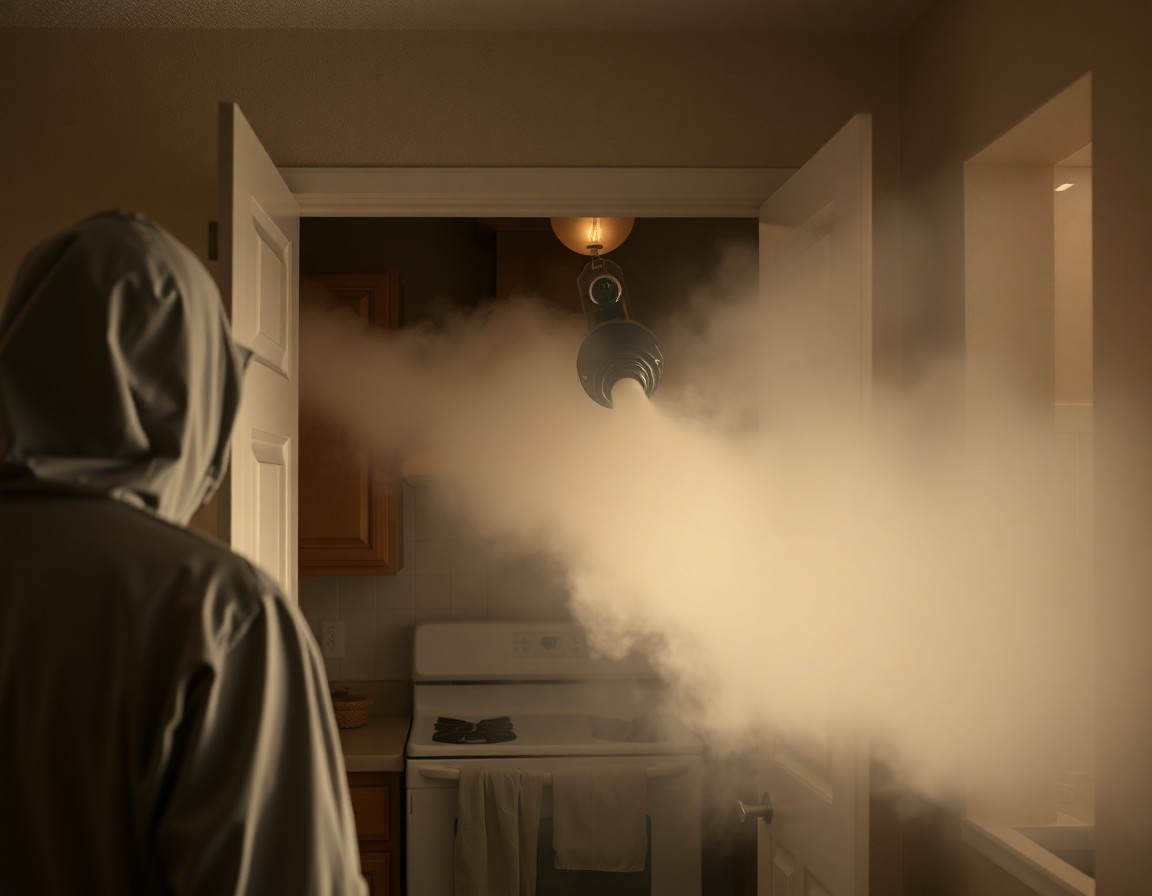
Thermal fogging penetrates the same micro-pathways the smoke originally traveled.
Common Brandon fire damage scenarios
These are the five fire causes we see most often in Brandon, in rough order of frequency:
Kitchen grease fires. The single most common residential fire cause in Florida. Damage typically concentrated in the kitchen with smoke travel through the adjacent rooms via airflow.
Electrical fires in walls. Common in 1970s and 1980s homes with original wiring. The fire may smolder for hours before flames appear, so smoke saturation is often severe.
Dryer lint fires. Underrated risk. Often originates in the dryer cabinet or the wall behind it, with smoke pulling through the rest of the laundry-area framing.
Lithium-ion battery fires. Increasingly common with e-bikes, scooters, vape devices, and rechargeable tools. Tend to produce dense oily smoke that travels into HVAC ductwork.
Lightning strikes. Concentrated June through September. Often attic-focused, often delayed flame (the strike ignites attic insulation that smolders before breaking out).
Insurance: how Brandon claims actually work
Most Brandon homes are written on Florida HO-3 policies through Citizens, Universal, Tower Hill, Heritage, Frontline, or one of the smaller Florida-domiciled carriers. The claim process is similar across all of them:
Notice of loss. Filed by you or by us on your behalf the same day.
Adjuster assignment. Usually within 24 to 72 hours.
Mitigation. Started immediately. Generally covered under the same fire peril.
Cause of loss letter. Issued by the fire marshal once their investigation concludes.
Xactimate scope. Produced by us (and reviewed by the carrier’s adjuster). Carriers in Florida expect Xactimate documentation, and we produce it natively.
Settlement and rebuild. Negotiated; sometimes the first offer is the right number, sometimes it is low and we push back.
We bill your carrier directly under Direction to Pay (or AOB where your policy permits). You are responsible only for your deductible. Florida policies typically carry a separate hurricane deductible that does NOT apply to fire losses; your standard “all other perils” deductible is what you pay on a fire claim.
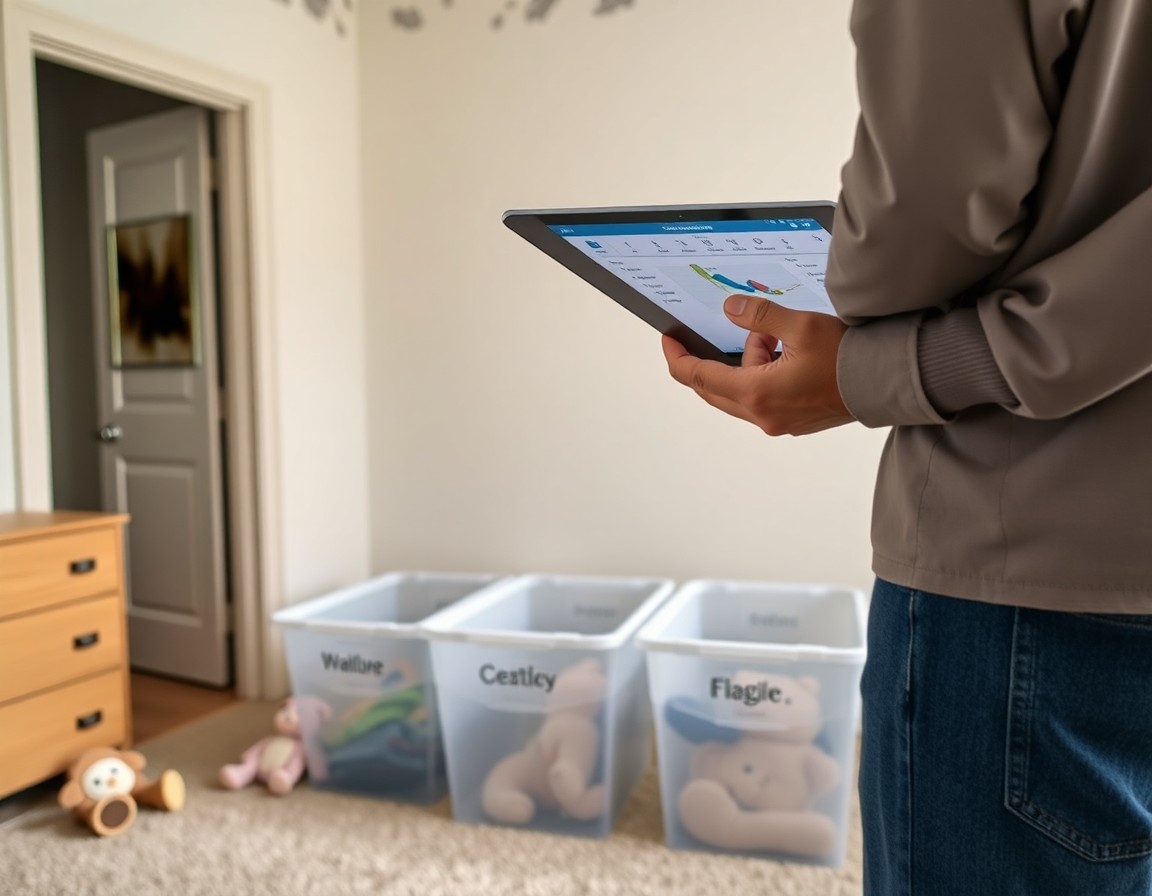
Digital inventory keeps the contents claim defensible.
What we can save and what we cannot
| Item type | Typical salvage rate in Brandon jobs | |—|—| | Ceramic, glass, china | 90%+ with ultrasonic cleaning | | Wood furniture (heirloom) | 75 to 90% via refinishing | | Clothing and linens | 80%+ via ozone + specialized laundering | | Upholstered furniture | 50 to 70% depending on smoke duration | | Mattresses | Usually replace | | Electronics | 60 to 80% with specialized cleaning before power-on | | Books and paper documents | Variable; freeze-drying when water-damaged | | Sentimental items (photos, jewelry, art) | Specialty restoration network used | | HVAC systems older than 15 years | Replace; cleaning rarely cost-effective |
The cleaning-vs-replacement decision is contents-specific and policy-specific. We walk every Brandon homeowner through this room by room.
Why 911 Restoration of Tampa Bay for Brandon
45-minute response across 33510 and 33511 (verified arrival window).
IICRC certifications: FSRT (Fire and Smoke), WRT (Water Restoration), OCT (Odor Control), AMRT (Applied Microbial Remediation).
Florida general contractor license: self-performed reconstruction, no subcontractor handoff.
Direct insurance billing; you pay only your deductible.
Owner-operated local crews; same Brandon-area technicians on repeat jobs.
24/7 dispatch, no answering service.
Frequently asked questions
Q: How quickly can you reach my Brandon home? A: 45 minutes or less from dispatch across Brandon ZIP codes 33510 and 33511, 24/7 including overnight and holidays.
Q: My fire was small (just the stovetop). Do I still need restoration? A: Almost certainly yes. Even a small kitchen fire deposits soot throughout the house via HVAC airflow. The fire itself may be a $400 problem; the smoke residue is usually a $4,000 to $15,000 problem. Insurance covers both.
Q: Can I clean the soot myself to save money? A: We recommend against it. Wiping soot improperly smears it permanently into porous surfaces (painted drywall, fabric, wood) and turns a cleanable surface into a replace-it surface. Specialized dry sponges and the right chemistry order matter.
Q: Will my insurance pay for hotel costs while we are out of the house? A: Most Florida HO-3 policies include Additional Living Expense (ALE) coverage that pays for temporary lodging, meals, and other necessary increased expenses while you cannot occupy the home. We help document the ALE claim.
Q: How long until we can move back in? A: For a contained kitchen fire, often 3 to 6 weeks total. For larger losses involving structural damage, 4 to 9 months. The biggest variables are the rebuild scope, supply chain on cabinets and finishes, and inspection timing.
Q: Do you handle commercial fires too? A: Yes. Brandon retail, office, and restaurant fires are scoped through our commercial restoration capability. Different IICRC standards apply (S540 for trauma/biohazard adjacent, S500 and S520 for water and mold, S700 for odor).
Q: My insurance company wants me to use their preferred vendor. Do I have to? A: No. Florida law gives you the right to choose your own contractor. Carrier preferred networks are convenient but not mandatory.
Q: What if mold starts before restoration finishes? A: It can, especially with firefighting water in Florida humidity. Our scope includes secondary mold growth prevention as part of structural drying, and we run AMRT-certified remediation if mold is detected during the job.
Brandon fire damage emergency dispatch
If your Brandon home has just had a fire, the clock is running on soot acidity and structural water damage. Call before you call anyone else except 911 and your insurance carrier.
Call (813) 261-1525 for 45-minute fire damage response in Brandon, FL. We board up the house tonight, start drying tomorrow, document the claim properly, and rebuild end-to-end.