Hurricane Damage Insurance Claim Florida: Wind vs Flood Guide
Quick answer: Florida hurricane damage is covered by two separate policies that homeowners often confuse. Wind, rain through wind-created openings, and tree-impact damage fall under your standard HO-3 homeowners policy. Storm surge, rising water from outside the home, and any flooding falls under a separate NFIP or private flood policy. You must file the claim within one year of the storm date, mitigate within 14 days to preserve coverage, and document all damage with photos before any cleanup. Florida HO-3 policies also cap mold remediation at $10,000 unless extra coverage was purchased. 911 Restoration of Tampa Bay handles emergency mitigation and full claim documentation across Tampa Bay. Call (813) 261-1525.
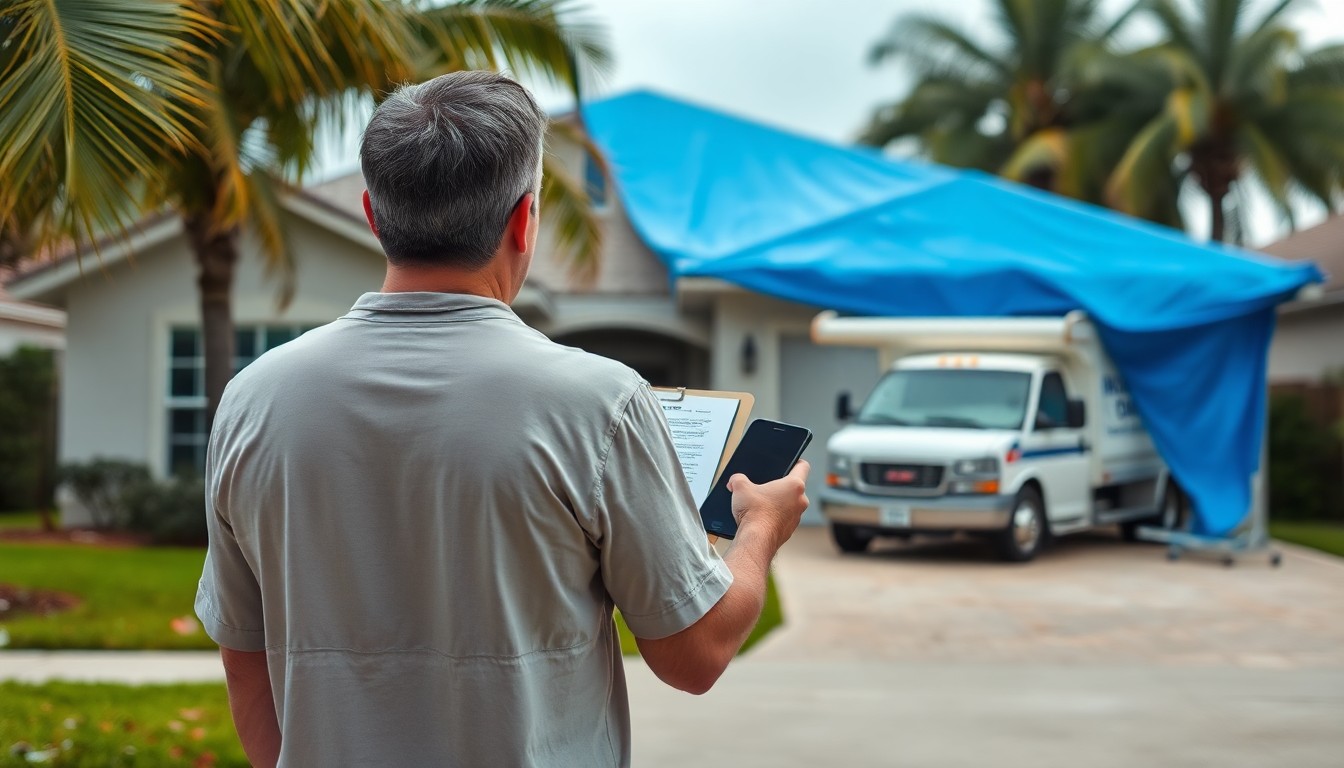
The day-after a Florida hurricane: insurance paperwork, blue tarps, and a tight 14-day clock.
After Hurricane Ian (2022), Hurricane Idalia (2023), Hurricane Helene (September 2024), and Hurricane Milton (October 2024), Florida homeowners have learned a hard lesson the hard way: hurricane insurance is not one policy, the deadlines are tight, and the wrong wording on a claim form can cost you the claim. This guide walks you through how the system actually works in Florida, with the specific numbers, deadlines, and policy mechanics you need to know before you pick up the phone.
We are 911 Restoration of Tampa Bay. We have written, scoped, and defended thousands of hurricane claims across Hillsborough and Pinellas Counties. The information below reflects current Florida statutes, the standard HO-3 form language used by the major Florida-domiciled carriers, and the NFIP general property form most homeowners actually hold.
This guide is not legal advice and is not a substitute for reading your specific policy. It is, however, a practical walk-through of what almost every Florida hurricane homeowner needs to know before they file.
The single most important concept: wind and flood are two separate policies
If you take one thing from this guide, take this:
Wind damage and flood damage are covered by different insurance policies, with different carriers, different deductibles, and different claim processes. The Florida HO-3 homeowners policy excludes flood. NFIP and private flood policies exclude wind. There is no single “hurricane policy” covering both perils.
Here is the breakdown:
Wind damage (covered by HO-3 homeowners)
Roof damage from wind
Siding torn off by wind
Trees blown into the structure
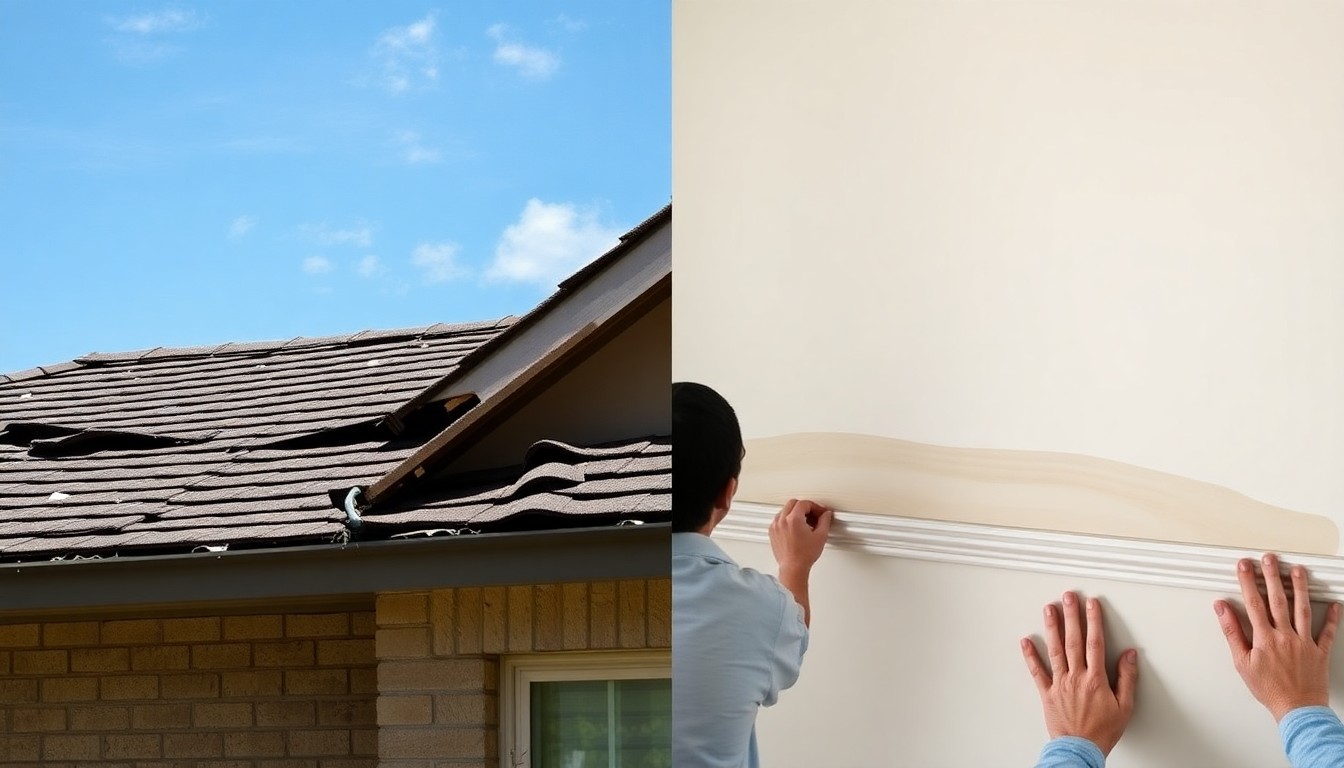
Rain entering through wind-created openings (a tree punches a hole in the roof, then rain comes in for two days)
Wind-driven debris damage to windows, doors, lanai screens
Interior damage caused directly by wind-created openings
Flood damage (covered by NFIP or private flood)
Storm surge from the bay or Gulf
Rising water entering the home from outside
Backflow through floor drains and toilets caused by rising groundwater
Mud and silt deposits from flooding
Damage to the lowest finished floor and contents stored there
Where it gets gray, and how carriers fight over it
Wind-driven rain that did NOT enter through a wind-created opening is generally excluded by HO-3 policies. If rain blew in through a closed but leaky window, that is usually not covered.
Surge versus wind-blown water: If both wind damage and storm surge hit the same property, anti-concurrent-causation clauses in many HO-3 policies can let the carrier deny portions of the claim. NFIP and HO-3 carriers sometimes blame each other and try to push the loss to the other policy.
“Anti-concurrent causation”: Standard HO-3 form language that excludes damage where flood was a concurrent cause. This is the clause most often used to deny wind claims after surge events.
The practical implication: if your Tampa Bay home took both wind and surge damage, you will likely have two open claims (one with your HO-3 carrier, one with NFIP or private flood) and the carriers will work hard to push each loss item to the other policy. This is one reason hiring a restoration company that documents loss attribution properly matters.
The Florida deadlines you cannot miss
Florida hurricane claims are governed by statute and by policy form. The deadlines are short, and missing them can void coverage entirely.
Notice of loss: 1 year from the date of loss
Under Florida Statute 627.70132 (as amended by SB 76 in 2021 and SB 2-A in 2022), you must give your insurance carrier initial notice of loss for a hurricane or windstorm claim within 1 year of the date of loss. Supplemental or reopened claims must be filed within 18 months. After the deadline, the carrier can deny based on late notice alone.
Mitigation: “as soon as reasonably possible” (practically, 14 to 30 days)
You are required to take reasonable steps to protect the property from further damage. Standard HO-3 form language uses “as soon as reasonably possible.” In practice, tarping the roof and extracting water needs to happen within the first 14 days. Beyond 30 days, carriers routinely argue that subsequent damage (mold, secondary water intrusion, additional structural deterioration) is on the homeowner, not the carrier.
Mold: covered only if mitigated within the first few days
Standard HO-3 policies cover mold only when it results from a covered sudden water loss AND was not allowed to grow through neglect. Practically, “neglect” usually means waiting more than 72 to 96 hours to start drying. Once you cross that threshold, the carrier can deny the mold portion of the claim even if the underlying water loss was covered.
Statute of limitations: 5 years for breach of contract
If a carrier wrongfully denies your claim, you have 5 years from the date of breach (typically the denial letter date) to file suit. This is the Florida statute of limitations for breach of insurance contract.
The 14-day acknowledgment and 60-day decision rule
Florida Statute 627.70131 requires carriers to acknowledge a claim within 14 days, begin investigation within 14 days, and pay or deny the claim within 60 days of receiving proof of loss (90 days for hurricane claims as of recent legislative updates). If they miss these deadlines, statutory interest accrues.
Wind and flood are two different policies, two different deductibles, and two different claim clocks.
Hurricane deductibles work differently from regular deductibles
If you have ever wondered why your “deductible” looks different on hurricane claims, here is why.
Florida HO-3 policies typically carry two separate deductibles:
All Other Perils (AOP) deductible: A flat dollar amount, often $1,000 to $2,500. Applies to fire, theft, non-hurricane water damage, etc.
Hurricane / Named Storm deductible: A percentage of the dwelling Coverage A limit. Typically 2%, 5%, or 10%. On a $400,000 home with a 5% hurricane deductible, that is a $20,000 deductible before the carrier pays a dollar.
The hurricane deductible only triggers when:
The National Hurricane Center issues a hurricane watch or warning that includes your area, AND
The storm system is named, AND
Damage occurs during the hurricane event window (typically from 1 hour before the named-storm watch is issued until 72 hours after the watch is dropped).
Outside that window, the AOP deductible applies even if your damage looks “hurricane-shaped.” This matters when claims are filed close to the edge of the storm window.
NFIP flood deductibles are separate, fixed-dollar amounts (typically $1,250 to $10,000), and apply to the flood claim only.
The $10,000 mold cap most Florida homeowners don’t know about
Florida HO-3 policies, by statute, allow carriers to cap mold remediation coverage at $10,000 unless additional mold coverage was purchased. Specifically, Florida Statute 627.70622 establishes the framework, and carriers typically offer:
Base policy: $10,000 mold limit (some are lower, some carriers offer higher base limits)
Optional mold endorsement: Can be purchased to raise the limit to $25,000, $50,000, or more
After hurricane damage with secondary mold growth, the $10K cap is often reached fast. A whole-house gut for mold on a flooded Tampa Bay home routinely runs $20K to $60K. If you only carry the base mold limit and your home grew significant mold, the carrier will pay the first $10K and the rest comes out of pocket.
This is why mitigation timing matters: prevent the mold from growing by drying fast and you keep the loss inside the higher dwelling-coverage limits.
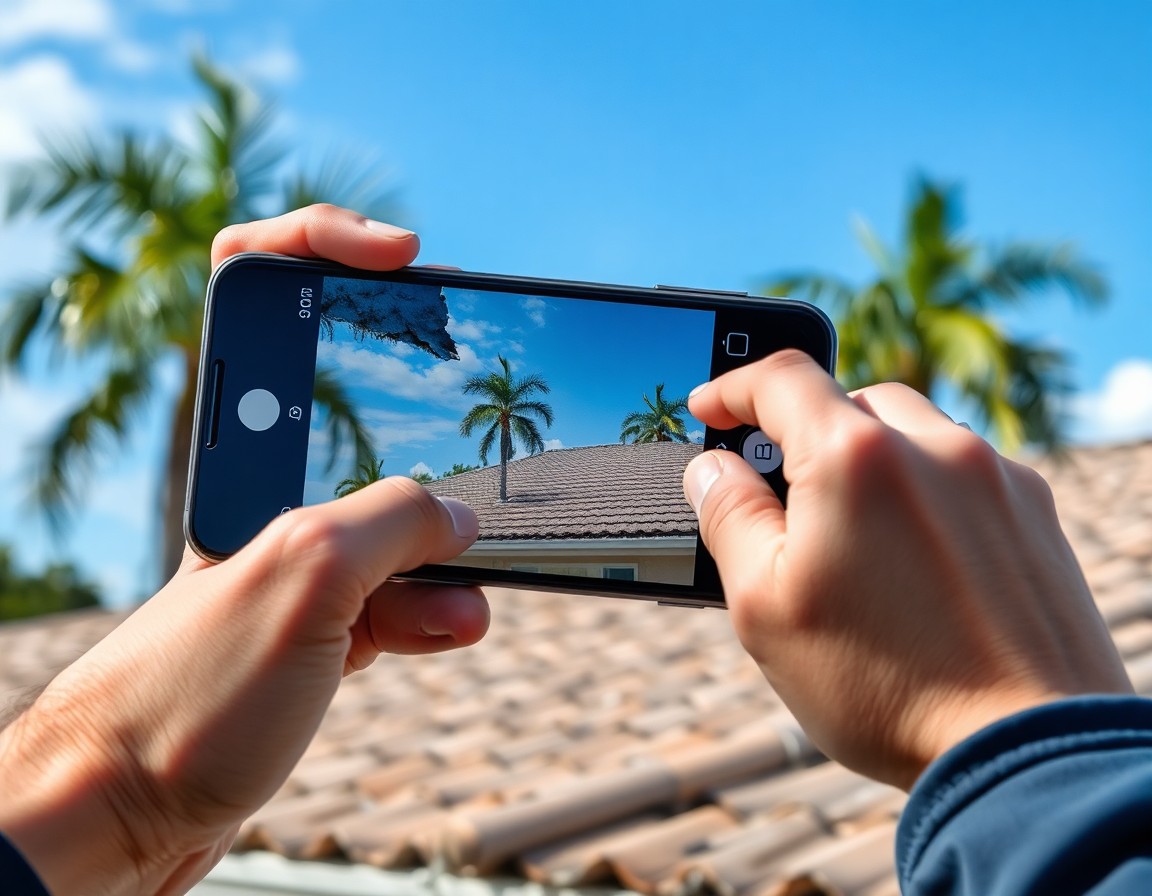
Time-stamped photos are your strongest evidence in a Florida hurricane claim.
Step by step: how to file a Florida hurricane claim correctly
Step 1: Document everything before you touch anything
Before cleanup, before tarping, before extraction, take photos and video. Every room, every angle, every closet. The exterior from all four sides. The damaged contents in place. The water lines on the walls. Date and time should be visible (modern phones embed this in metadata).
If you can safely do it, photograph or video the damage progression: water still actively coming in, structural movement, etc. Carriers value contemporaneous documentation.
Step 2: Call your insurance carrier and a restoration company on the same day
Open your claim. Get a claim number. Then call us at (813) 261-1525 (or any IICRC-certified restoration company you trust). We will begin emergency mitigation while your claim is being assigned.
Step 3: Determine which policy (or policies) apply
Wind damage goes to the HO-3 carrier. Flood/surge goes to NFIP or private flood. Both can be open simultaneously. The first $10K of mold remediation is typically on the HO-3 carrier.
Step 4: Authorize emergency mitigation
Tarping, board-up, water extraction, HEPA filtration, dehumidification, anti-microbial treatment. Generally a covered expense even before the larger claim is settled. We document the mitigation scope in Xactimate (the carrier-expected format) and submit invoices through Direction to Pay or Assignment of Benefits.
Step 5: Meet the adjuster on-site
Have your documentation ready: photos, videos, list of damaged contents with approximate values, receipts for high-value items if you have them. We are typically on-site with the homeowner during the adjuster meeting because we can speak to the technical scope (moisture readings, structural drying needs, mold containment requirements) the adjuster needs to write.
Step 6: Review the adjuster’s scope
The adjuster will produce an estimate, usually in Xactimate. We review it line by line. Common issues:
Drying days underestimated for Florida humidity
Contents pack-out missing
Mold scope absent or under-scoped
Code upgrades excluded (Florida has Ordinance & Law coverage if purchased)
Trim, paint, and finish materials under-allocated
Step 7: Negotiate, supplement, or escalate
If the scope is inadequate, we submit a supplement with documentation. If the carrier denies or significantly under-scopes, the next escalation is appraisal, mediation, or (rarely needed) a public adjuster or attorney.
Once mitigation is complete and the claim scope is settled, reconstruction begins. We self-perform under our Florida general contractor license, which means one contract, one schedule, one accountable party. For deeper detail on the storm-damage side, see hurricane and storm damage restoration in Tampa.
The five most common claim mistakes Florida homeowners make
In our years restoring Tampa Bay properties, we see the same five mistakes repeatedly:
Waiting too long to call. Mold starts in 48 to 72 hours; carriers deny the mold portion if you waited.
Cleaning up before photographing. Removes the evidence carriers need to scope the loss accurately.
Filing only the wind claim and not the flood claim (or vice versa). Leaves money on the table or pushes coverage onto the wrong policy.
Accepting the first adjuster scope without review. First scopes are routinely 20% to 40% below the actual cost of restoration. Carriers expect supplements.
Signing a full release before reconstruction is complete. Once you sign, the claim is closed. If a hidden issue emerges later (a saturated wall cavity, a corroded wire), you have no recourse. Don’t sign until you are sure.
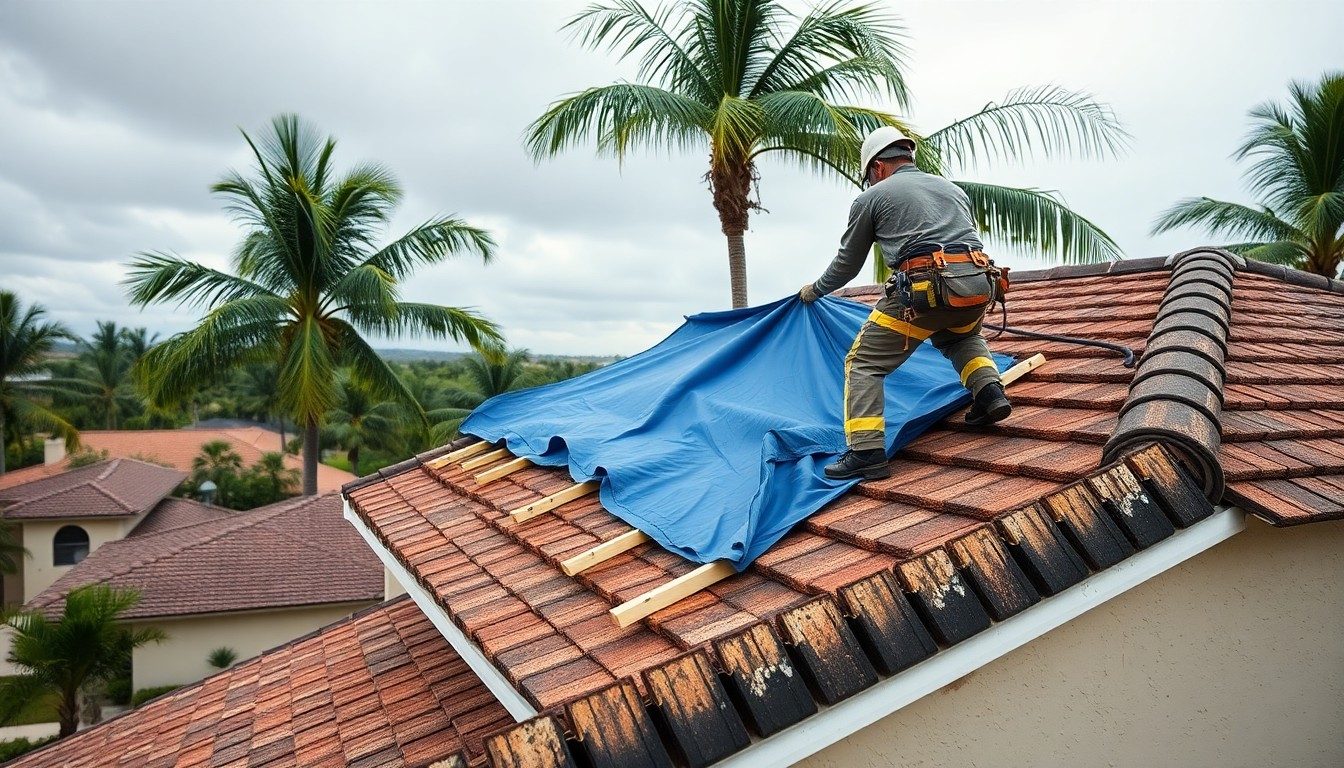
Emergency tarp-over within 24 hours is both a claim requirement and a damage-mitigation must.
Wind vs flood: a side-by-side comparison
| Factor | Wind (HO-3) | Flood (NFIP or private) | |—|—|—| | Covers | Wind, wind-driven rain through wind-created openings, tree impact | Rising water, storm surge, mudflow | | Deductible | Hurricane % of Coverage A | Fixed dollar amount | | Coverage A limit | Dwelling value (varies) | NFIP cap: $250K dwelling, $100K contents | | Reporting deadline | 1 year from loss | 60 days for NFIP Proof of Loss after notice | | Mitigation requirement | “As soon as reasonably possible” | Same | | Mold sub-limit | Typically $10K base | Mold from flood typically not covered by NFIP | | Contents coverage | Personal property at policy limits | Contents on a separate NFIP policy | | Living expenses (ALE) | Covered if home uninhabitable | NOT covered by NFIP |
The ALE difference is one of the biggest practical surprises after a flood-only loss: NFIP does not pay for your hotel. If the only damage to your home is flood and you have to live somewhere else for three months, that is out of pocket.
Why call a restoration company before the adjuster shows up
Three reasons:
Mitigation has to start now, not in five days. The carrier wants the home protected from further damage. If they have to pay for additional damage that occurred because you waited for their adjuster, they will fight that portion of the claim.
The Xactimate scope matters. Adjusters write in Xactimate. Restoration contractors write in Xactimate. If your scope is written by someone who does not know how Florida humidity, salt-air corrosion, or category 3 water actually behaves, the scope will be wrong. We write scopes that match field reality and that adjusters can accept without 30 days of back-and-forth.
The two-claim coordination problem. When wind and flood both apply, you need someone documenting which loss item belongs to which policy. We do this routinely.
Frequently asked questions
Q: I have hurricane damage but my carrier says “this is flood, not wind.” What do I do? A: Get our documentation. We can attribute specific damage to specific causes (wind versus rising water versus wind-driven rain) using moisture mapping, structural patterns, and timing of when each damage type appeared. This is the most common disputed-cause-of-loss scenario in Florida.
Q: My carrier is taking 60 days to respond. Is that legal? A: Florida Statute 627.70131 requires acknowledgment in 14 days and a coverage decision within 60 (or 90 for hurricane) days of receiving proof of loss. If they are past statutory deadlines, you may be entitled to interest and have grounds for escalation.
Q: I don’t have flood insurance and my home flooded. What can I do? A: Apply for FEMA Individual Assistance (when a federal disaster declaration is issued for your county). Apply for SBA Disaster Loans. Document everything. We have helped homeowners through FEMA-funded restoration scopes and can do the documentation, though FEMA payment timelines are longer than insurance.
Q: My mold remediation is going to cost $40,000 but my mold cap is $10,000. What happens? A: If the mold is a direct consequence of a covered loss (e.g., wind opened the roof, rain came in, mold grew), the broader dwelling coverage may apply to the structural drying and material removal, with the mold cap applying only to the mold-specific remediation steps. We scope these jobs to keep as much of the cost on the dwelling side as the claim language supports.
Q: Can I choose my own restoration company or do I have to use the carrier’s recommendation? A: You choose. Florida law gives you the right to select your own contractor. Carrier “preferred vendor” networks are convenient for the carrier; they are not mandatory.
Q: What is Assignment of Benefits (AOB) and should I sign one? A: AOB assigns your right to claim payment to the restoration company so they can bill the carrier directly. Florida has restricted AOB use over the past several years; many carriers now require Direction to Pay instead. Both let us bill the insurance carrier on your behalf. We explain the difference before you sign anything.
Q: My home took both fire and hurricane damage in the same incident (electrical fire during the storm). How is that claimed? A: Usually under the HO-3 fire peril, since fire is a covered peril regardless of cause. Wind/hurricane deductibles do not apply to fire claims. We document the chain so the carrier scopes it as a fire claim, not a wind claim.
Q: How long does a full hurricane restoration take in Tampa Bay? A: Emergency mitigation: 3 to 14 days. Drying and demolition: 2 to 6 weeks. Reconstruction: 3 to 12 months depending on scope, supply chain (post-major-storm), and inspection backlogs at the county.
Q: What is “Ordinance & Law” coverage and why does it matter for hurricanes? A: Optional HO-3 coverage that pays for code-upgrade costs (newer hurricane straps, updated electrical, raised mechanicals, etc.) when local code requires the rebuild to meet current standards. Without it, the carrier pays only to replace what was there. With it, code upgrades are covered. Many older Tampa Bay homes need it.
Tampa Bay hurricane claim help
If you have hurricane damage and need someone to handle the mitigation and the claim documentation at the same time, that is what we do.
Call (813) 261-1525 for 45-minute emergency response across Hillsborough and Pinellas Counties. We tarp the roof, extract the water, document the loss for both wind and flood policies, write the Xactimate scope, and bill your carrier directly.