

28
Aug
How to Vet a Tampa Mold Remediation Company: 8 Questions to Ask Before Hiring
When you discover mold in your Tampa Bay home, the pressure to act fast can cloud your judgment—and that’s exactly when homeowners make costly hiring mistakes. Choosing a mold remediation company shouldn’t be a panic purchase driven by fear; it’s a buyer’s market decision that requires asking the right questions upfront. This guide gives you 8 specific qualifying questions that separate professional remediation contractors from those who cut corners, helping you protect both your property investment and your family’s living environment. For local help, see Tampa mold removal.
Why Vetting Your Tampa Mold Remediation Company Matters
Tampa Bay’s subtropical climate creates perfect conditions for mold growth year-round. With humidity levels regularly exceeding 70% and hurricane season bringing water intrusion risks from June through November, Hillsborough and Pinellas County homeowners face unique mold challenges that demand specialized expertise. The remediation company you choose will be entering your home, potentially removing building materials, and determining what stays and what goes—making thorough vetting essential before signing any contract.
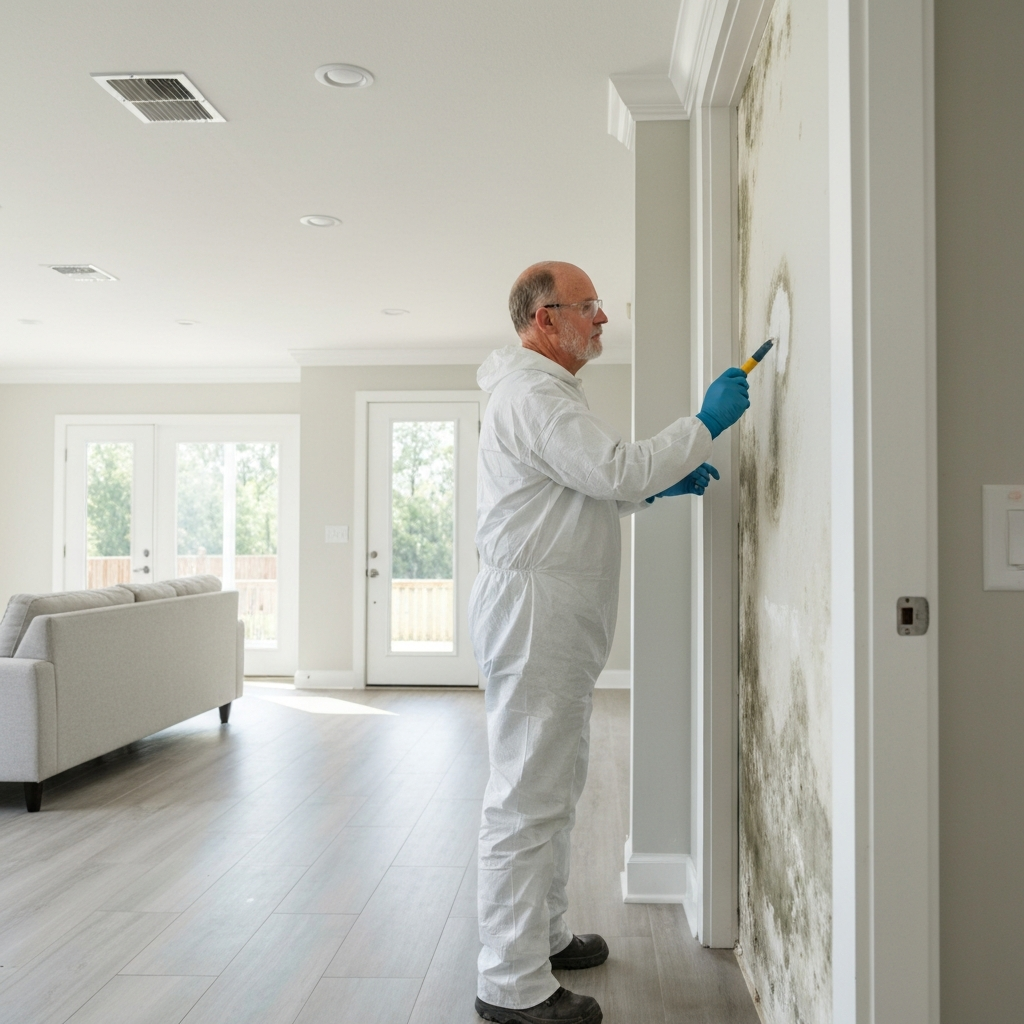
Professional mold removal in Tampa requires more than just cleaning visible growth. It demands containment protocols, air quality management, moisture source identification, and documentation that satisfies insurance requirements. The questions below help you identify contractors who follow industry standards rather than those offering quick fixes that lead to recurring problems.
Question 1: Are You IICRC Certified for Mold Remediation?
The Institute of Inspection, Cleaning and Restoration Certification (IICRC) sets the industry standard for mold remediation training. This isn’t a generic business license—it’s specialized certification proving technicians understand containment barriers, negative air pressure systems, proper removal techniques, and cross-contamination prevention.
When asking this question, request to see current certification cards for the actual technicians who will work in your home, not just the company owner. IICRC certification requires ongoing education, meaning certified technicians stay current with evolving remediation protocols. Companies working throughout Tampa Bay’s diverse housing stock—from historic Hyde Park bungalows to newer Westchase developments—need this training to adapt their approach to different construction types and mold scenarios.
At 911 Restoration of Tampa Bay, our technicians maintain active IICRC certification and apply these protocols to every project, whether we’re addressing water damage restoration that could lead to mold or active remediation work.
Question 2: Do You Hold ACAC or Similar Third-Party Accreditation?
While IICRC certification covers technician training, accreditation from organizations like the American Council for Accredited Certification (ACAC) demonstrates company-wide commitment to industry best practices. ACAC accreditation specifically validates expertise in microbial investigation and remediation consulting.
This question separates companies that treat mold remediation as a specialty service from those offering it as an add-on to general contracting. Third-party accreditation requires documented quality control procedures, ongoing professional development, and adherence to S520 standards—the recognized guidelines for mold remediation published by the IICRC.
Ask potential contractors what professional organizations they belong to and whether they participate in continuing education. Companies serious about remediation invest in staying ahead of industry developments, particularly important in Florida where building codes and moisture management strategies continue evolving.
Question 3: Will You Provide a Written Remediation Plan Before Starting Work?
A detailed, written remediation plan is non-negotiable. This document should outline the specific scope of work, containment strategies, removal methods, disposal procedures, and restoration steps. It protects you from scope creep and provides documentation your insurance carrier may require.
The plan should address:
- Exact areas requiring remediation with measurements
- Containment barriers and negative air machine placement
- Personal protective equipment (PPE) protocols
- Materials designated for removal versus cleaning
- HEPA filtration and air scrubbing procedures
- Disposal methods compliant with local regulations
- Timeline with project phases clearly defined
Hillsborough and Pinellas Counties have specific requirements for mold remediation contractors, and your written plan should reference compliance with Florida Statute 468 Part XVII, which governs mold-related services. Companies that hesitate to provide detailed written plans often lack the systematic approach required for thorough remediation.
Question 4: Do You Use Independent Third-Party Clearance Testing?
This question reveals whether a company prioritizes verification over convenience. Third-party clearance testing means an independent certified industrial hygienist or mold assessor—not affiliated with the remediation company—conducts post-remediation air quality testing to verify the work meets acceptable standards.
Some contractors offer to do their own testing, which creates an obvious conflict of interest. Independent verification protects you and provides documentation that work was completed properly. This becomes especially important if you’re dealing with insurance claims through our insurance assistance services, as carriers often require third-party confirmation.
The clearance testing should include:
- Air sampling comparing remediated areas to outdoor control samples
- Visual inspection confirming no visible mold growth
- Verification that moisture sources have been addressed
- Documentation of spore counts and species identification
Companies confident in their work welcome third-party verification. Those who discourage it may be cutting corners that won’t be apparent until mold returns weeks or months later.
Question 5: Are You Approved to Work with Major Insurance Carriers?
Insurance company approval indicates a contractor has proven reliability, proper licensing, adequate liability coverage, and claims documentation experience. While you’re not legally required to use an insurance-approved contractor, those relationships suggest the company understands insurance requirements and can navigate the claims process effectively.
Ask specifically:
- Which insurance carriers have you worked with on mold claims?
- Can you provide references from recent insurance-related projects?
- Do you handle documentation and communication with adjusters?
- What’s your experience with remediation following water damage from storms common during Tampa’s hurricane season?
At 911 Restoration of Tampa Bay, we work directly with insurance companies and understand the documentation they require, which streamlines the claims process and reduces homeowner stress. You can reach our team at (813) 261-1525 to discuss how we handle insurance coordination.
Question 6: How Transparent Are You About Project Scope Changes?
Mold remediation often reveals additional issues once containment barriers go up and materials are removed. Professional contractors establish clear protocols for communicating scope changes, obtaining approval for additional work, and documenting why changes are necessary.
Ask how the company handles discoveries like:
- Hidden mold growth behind walls or under flooring
- Structural damage requiring repair before restoration
- Additional moisture sources needing attention
- HVAC system contamination requiring duct cleaning
The right answer involves stopping work, documenting findings with photos, explaining why additional remediation is necessary, providing written estimates for the added scope, and obtaining your approval before proceeding. Companies that make unilateral decisions or present surprise bills at project completion lack the transparency necessary for trust.
This transparency matters particularly when remediation connects to other restoration needs. For example, if we discover mold stemming from a sewage backup issue, we document both problems separately and explain how addressing the source prevents recurrence.
Question 7: What Timeline Guarantees Do You Offer?
While responsible contractors won’t promise unrealistic completion dates, they should provide timeline frameworks with milestone commitments. Understanding project duration helps you plan for temporary housing if needed, coordinate with other contractors for repairs, and manage disruption to your household.
A professional timeline discussion includes:
- Estimated days for containment and removal phases
- Drying time required before reconstruction can begin
- Clearance testing scheduling (usually 24-48 hours after remediation)
- Factors that might extend timelines (hidden damage, material availability, weather delays)
- Communication protocols if delays occur
| Project Phase | Typical Timeline | Variables That Extend Duration |
|---|---|---|
| Containment Setup | 4-8 hours | Multiple rooms, complex HVAC isolation |
| Removal & Cleaning | 1-3 days | Extent of contamination, structural damage |
| Drying & Dehumidification | 2-5 days | Tampa’s humidity, hidden moisture pockets |
| Clearance Testing | 1-2 days | Inspector scheduling, failed initial testing |
| Restoration | 3-7 days | Material sourcing, extent of reconstruction |
Companies providing detailed timeline estimates demonstrate experience and project management capabilities. Those offering vague “we’ll get it done” responses often lack the organizational structure for efficient completion.
Question 8: What Warranty Do You Provide on Remediation Work?
A warranty demonstrates confidence in work quality and provides recourse if mold returns. Professional remediation companies typically offer warranties covering their specific remediation work, though terms vary based on whether underlying moisture issues have been properly addressed.
When discussing warranties, clarify:
- What specifically is covered (mold recurrence in remediated areas, workmanship, materials)
- Duration of coverage (typically 1-5 years for professional work)
- Conditions that void coverage (new water intrusion, failure to address moisture sources)
- Whether warranty is transferable if you sell the property
- Process for warranty claims and response timeframes
Be cautious of companies offering guarantees that mold will never return anywhere in your home—that’s unrealistic in Tampa Bay’s climate. Responsible warranties cover the remediated areas specifically and typically require that you’ve addressed the moisture source that caused the original growth.
Our approach at 911 Restoration of Tampa Bay includes identifying and recommending solutions for moisture sources, whether that’s improving ventilation in Pinellas County’s coastal properties or addressing drainage issues common in Hillsborough County’s clay soil areas. We stand behind our remediation work because we address root causes, not just symptoms.
Additional Red Flags to Watch For
Beyond these eight essential questions, certain warning signs should immediately disqualify a contractor:
- Pressure tactics or same-day signing demands: Professional remediation requires assessment time; legitimate companies don’t pressure instant decisions
- Lack of proper licensing: Florida requires mold remediators to be licensed; verify credentials through the Florida Department of Business and Professional Regulation
- No physical business address: Fly-by-night operators disappear when problems arise; established companies have verifiable local presence
- Unwillingness to provide references: Companies with track records readily share customer contacts
- Cash-only policies: Legitimate businesses accept various payment methods and provide proper documentation
If you’re dealing with mold following fire damage where water was used for suppression, the complexity increases significantly. Our fire damage restoration services include mold prevention protocols specific to post-fire scenarios common in Tampa Bay.
Making Your Final Decision
Once you’ve asked these eight questions to multiple contractors, compare responses systematically. The company that provides the most detailed, transparent answers—backed by proper certifications and verifiable experience—typically delivers the most reliable results.
Remember that the lowest bid often indicates corners being cut. Proper containment, HEPA filtration, disposal, and third-party testing require investment in equipment and processes. Companies significantly underbidding competitors may be skipping essential steps that lead to incomplete remediation and recurring problems.
Tampa Bay homeowners deserve remediation contractors who treat mold as the serious issue it is—requiring systematic approaches, proper training, and verification protocols. The questions outlined above help you identify companies committed to doing the job right the first time.
Get Professional Mold Remediation Assessment in Tampa Bay
If you’re facing mold issues in Hillsborough or Pinellas County, don’t let urgency override careful contractor selection. 911 Restoration of Tampa Bay provides free assessments where we’ll answer every question on this list, explain our remediation approach, and provide detailed written plans before any work begins.
Our IICRC-certified technicians understand Tampa Bay’s unique mold challenges, from humidity management in coastal properties to water intrusion risks during storm season. We work with third-party testing companies, coordinate directly with insurance carriers, and stand behind our work with comprehensive warranties.
Call us today at (813) 261-1525 or visit our contact page to schedule your assessment. We’re available 24/7 for emergency situations and provide transparent guidance on every remediation project, helping you make informed decisions rather than rushed ones. Your Tampa Bay home deserves professional mold remediation—and you deserve contractors who earn your trust through expertise, transparency, and accountability.
Latest Posts
Contact Us
For Advice
Need help? Talk to an expert
(813) 261-1525