

28
Aug
Cleaning vs Sanitizing vs Disinfecting vs Sterilizing Explained
Key Highlights
- Cleaning is the first step, physically removing dirt and some germs from surfaces.
- Sanitizing lowers the number of microorganisms to a level considered safe by public health standards.
- Disinfecting goes a step further by killing a higher percentage of germs, including viruses.
- Sterilizing is the ultimate level, completely eliminating all forms of microbial life, including spores.
- Understanding the difference between cleaning, sanitizing, disinfecting, and sterilizing helps you choose the right method for every situation.
Introduction
Have you ever wondered if you’re using the right product for the job? The terms cleaning, sanitizing, disinfecting, and sterilizing are often used interchangeably, but they mean very different things. Knowing the distinction is key to keeping your home and workplace truly clean and safe. This guide will break down each process, explaining what it does, when you should use it, and what products you need to get the job done right.
Understanding the Four Concepts: Cleaning, Sanitizing, Disinfecting, and Sterilizing
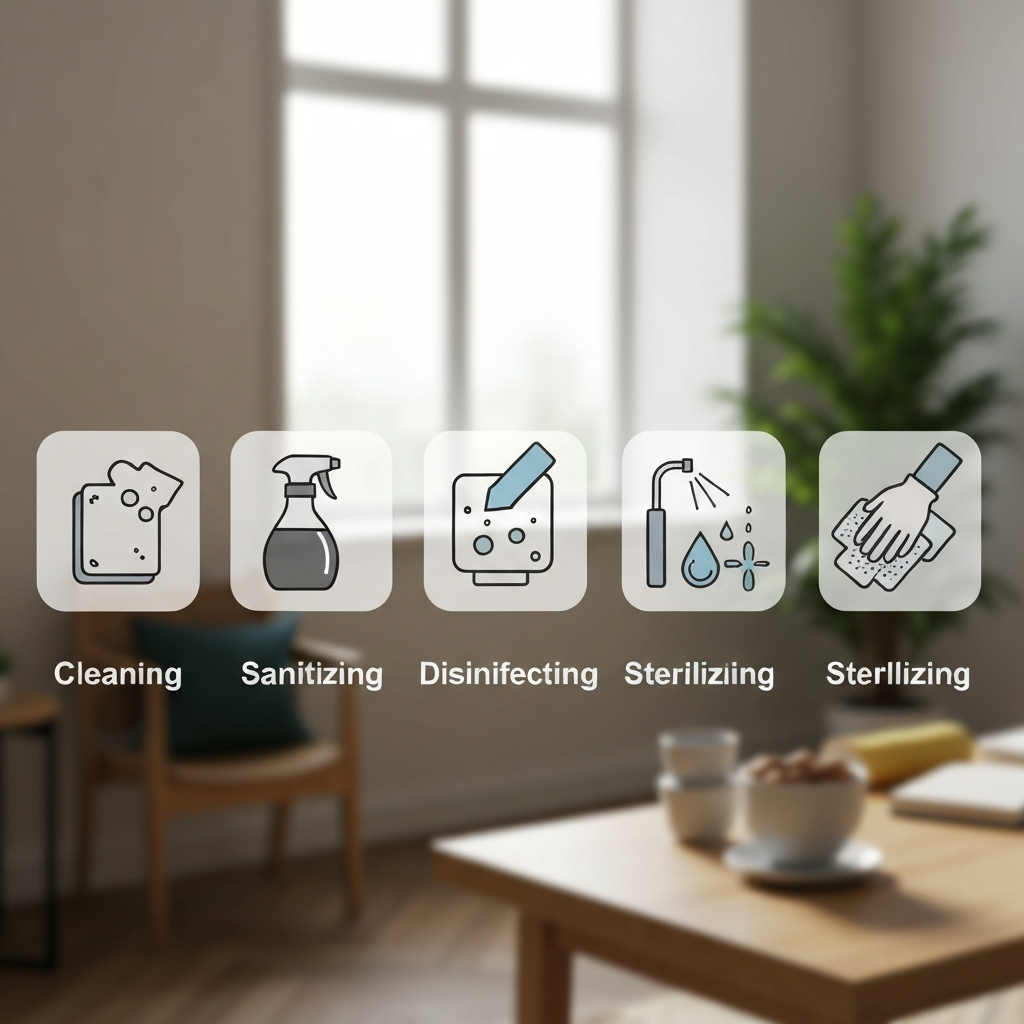
It’s easy to think that if a surface looks clean, it is clean. However, there’s a big difference between removing visible dirt and eliminating invisible germs. Each of these four terms represents a different level of cleanliness, defined by an official government organization to protect public health.
From simply wiping away crumbs to destroying all microbes, the methods vary in their power and purpose. Cleaning physically removes germs, while sanitizing lowers their numbers to a safe level. Disinfecting kills most germs, and sterilizing eliminates them entirely. The following sections will explain these differences in more detail.
Definitions and Key Differences
The main difference between these processes is what they accomplish. Cleaning is the most basic step. It uses soap or detergent and water to physically remove visible debris from a surface. While this process removes dirt, it doesn’t necessarily kill germs, though it does get rid of some of them.
Sanitizing and disinfecting are chemical processes that kill germs. Sanitizing reduces bacteria to a safe level (by 99.9%), while disinfecting kills an even greater percentage of viruses and bacteria (99.999%). The most extreme method is sterilizing, which destroys all forms of microbial life, including tough bacterial spores.
Process | What It Does | Level of Germ Removal |
|---|---|---|
Cleaning | Physically removes dirt, grime, and some germs. | Low |
Sanitizing | Reduces bacteria to a safe level. | Medium (Kills 99.9%) |
Disinfecting | Kills most bacteria and viruses on surfaces. | High (Kills 99.999%) |
Sterilizing | Destroys all forms of microbial life, including spores. | Complete (Kills 100%) |
When Each Should Be Used in Everyday Life (Home and Workplace)
Knowing when to use each method is crucial for maintaining a healthy environment at home and in the workplace. You don’t always need the strongest approach; the right choice depends on the situation and the type of surface.
For everyday messes with visible dirt, cleaning is usually sufficient. However, if a surface could harbor harmful bacteria that cause food poisoning, you need to go a step further. You should sanitize surfaces that come into contact with raw meat or other potentially hazardous foods. Disinfecting is necessary when you need to eliminate viruses, such as when a family member or coworker is sick.
Here’s a quick guide:
- Clean: Floors, windows, and surfaces with dust or crumbs.
- Sanitize: Kitchen counters after preparing food, baby high chairs, and toys.
- Disinfect: Doorknobs, light switches, bathroom fixtures, and any surfaces touched by a sick person.
Effectiveness in Germ Removal and Safety
The effectiveness of each method climbs a ladder, with cleaning at the bottom and sterilizing at the very top. While cleaning is a great first step for disease control, it mainly moves germs rather than killing them. Sanitizing and disinfecting are the workhorses for reducing the number of microorganisms on everyday surfaces.
When using chemicals for these processes, safety is paramount. Always read product labels, ensure proper ventilation, and never mix different chemicals. Understanding which process kills the most germs helps you make informed decisions for your home or business. The next sections dive deeper into their effectiveness and limitations.
Which Process Kills More Germs—Cleaning, Sanitizing, Disinfecting, or Sterilizing?
When it comes to eliminating germs, there is a clear hierarchy. Sterilizing is the most effective process, as sterilization results in the complete destruction of all forms of microbial life, including viruses, bacteria, fungi, and spores. This level of clean is typically reserved for medical and laboratory settings.
For household and commercial use, disinfection is the most powerful method you’ll likely use. It kills 99.999% of germs on a surface, which includes harmful viruses that sanitizing might not eliminate. Sanitizing is a step down, reducing bacteria by 99.9%, which is often sufficient for food-contact surfaces.
Cleaning is the least effective at killing germs, as its primary purpose is to physically remove them along with dirt. While this reduces the germ count, it doesn’t kill them with the same efficiency as sanitizing or disinfection.
Limitations of Each Method for Home Use / Kitchen and Commercial Spaces
Each method has its limitations, especially when applied to different settings. One of the biggest mistakes is trying to sanitize or disinfect a dirty surface. The presence of organic material and other residues can make disinfectants less effective. This is why cleaning is such a critical first step.
In home kitchens, sanitizing is often enough to lower germs to a safe level on food-prep surfaces. Disinfecting is more common for non-food environmental surfaces, especially when illness is a concern. Sterilizing, however, is generally unnecessary and impractical for home use. The intense processes, often involving high heat, aren’t needed for household safety.
Here are a few key limitations:
- Cleaning: Doesn’t kill most germs, it only removes them.
- Sanitizing/Disinfecting: Can be ineffective if a surface isn’t cleaned first.
- Sterilizing: Unnecessary for home settings and can be difficult to achieve without special equipment.
Common Methods and Products Used in Tampa-St Petersburg (Sarasota), FL
In the Tampa-St. Petersburg and Sarasota areas, you can find all the products you need to effectively clean, sanitize, and disinfect your spaces. For basic cleaning, simple soap or detergents and water are perfect. These products are designed to lift dirt and grime from surfaces so you can wipe them away.
When you need to sanitize or disinfect, you’ll want to look for products with specific germ-killing abilities. A homemade solution of household bleach and water is a classic choice recommended by health authorities. You can also find commercial products specifically labeled as a sanitizer or disinfectant. Always check for an EPA registration number on a disinfectant to ensure it meets federal standards. Now, let’s look at some popular options for each task.
Popular Choices for Cleaning, Sanitizing, Disinfecting, and Sterilizing
Choosing the right product is simple once you know your goal. For everyday cleaning tasks like wiping counters or removing stains and grime, an all-purpose cleaner and a cloth will do the trick. These are great for visible messes.
When it comes to killing germs, the products for sanitizing and disinfecting are more specific. A product labeled “sanitizer” is great for food surfaces, while a “disinfectant” offers more power for high-touch spots like doorknobs and light switches. Sterilizing is different, as it usually relies on methods like high heat or pressure rather than common household products.
Here are some popular product choices:
- Cleaning: All-purpose sprays, dish soap, and detergents.
- Sanitizing: A diluted bleach solution (1 tsp bleach per quart of water) or antibacterial sprays.
- Disinfecting: A stronger bleach solution (1 ½ tbsp per quart of water) or EPA-registered disinfectant sprays and wipes.
Conclusion
In summary, understanding the distinctions between cleaning, sanitizing, disinfecting, and sterilizing is crucial for maintaining a safe and healthy environment. Each method serves specific purposes and is vital in different situations, whether at home or in commercial spaces. By implementing the right approach based on your needs, you can effectively minimize germs and ensure safety for yourself and others. Remember, it’s not just about how clean things look; it’s about creating a genuine barrier against harmful pathogens. If you’re unsure which method to use or need personalized advice on cleaning products, feel free to reach out for a consultation. Your health and well-being should always be a top priority!
The Purpose of Cleaning
The main purpose of cleaning is the physical removal of foreign material from surfaces. This includes things you can see, like dust, crumbs, and other visible dirt, as well as things you can’t, like some germs and organic matter. Cleaning relies on mechanical action—think scrubbing, wiping, and rinsing—along with soap or detergent to lift and wash away unwanted substances.
While cleaning does remove some germs from surfaces, it doesn’t kill them. Its primary function isn’t to eliminate bacteria and viruses but to reduce their numbers by getting rid of the dirt they live on. Think of it as the essential first step that prepares a surface for sanitizing or disinfecting, making those processes more effective.
The Importance of Sanitizing
Sanitizing is a crucial step for controlling the spread of infection, especially in areas where food is prepared or where children play. The goal of sanitization is to lower the number of microorganisms on a surface to a safe level, as determined by public health standards. It’s a step up from cleaning because it actively kills bacteria.
Unlike disinfection, which targets a broader range of germs including viruses, sanitizing is primarily focused on reducing bacteria. According to the EPA, a sanitizer must kill 99.9% of bacteria. This process significantly reduces the risk of illness from common germs found on kitchen counters, cutting boards, and high chairs, making it an essential practice for everyday safety.
The Power of Disinfecting
Disinfecting harnesses the power of chemicals to kill a wide variety of germs, including both bacteria and viruses. This process is more effective at eliminating pathogens than sanitizing. To be classified as a disinfectant by the EPA, a product must kill 99.999% of germs listed on its label. This is why disinfection is recommended when someone in your home or office is sick.
However, it’s important to note that most disinfectants may not kill bacterial spores, which are highly resistant, dormant forms of bacteria. You should always use an EPA-registered product and follow the directions carefully, allowing the disinfectant to sit on the surface for the recommended period of time to ensure it works properly.
Key Differences Between Cleaning, Sanitizing, Disinfecting, and Sterilizing
The fundamental difference between these four methods lies in their outcomes. Cleaning is about appearance and physical removal; it uses friction and soap to get rid of dirt and reduce the number of germs. It’s the starting point for a truly clean surface.
Sanitizing, disinfecting, and sterilizing are all about killing germs, but to different degrees. Sanitizing reduces bacteria to a safe level. Disinfecting kills a higher percentage of germs, including viruses. Sterilizing is the most absolute method, resulting in the total destruction of all forms of microbial life. Each step up the ladder offers a higher level of protection against invisible threats.
When to Use Each Method
Deciding which method to use depends entirely on the context. For daily upkeep and removing visible dirt, cleaning is your go-to. It’s the necessary first step before any other reprocessing level. If you’re dealing with surfaces that come into contact with food, like kitchen counters, sanitizing is the appropriate choice to reduce bacteria.
You should switch to disinfecting for high-touch surfaces like doorknobs, faucets, and light switches, especially if someone is ill, to kill viruses and other pathogens. Sterilizing is rarely, if ever, needed in a household setting. For specific guidance, official websites like the CDC and EPA provide detailed recommendations for different situations, helping you choose the right method every time.
Common Cleaning Mistakes to Avoid
One of the most common mistakes is to substitute sanitizing or disinfecting for cleaning. Chemical treatments are far less effective when they have to fight through layers of dirt or organic material. Always perform the mechanical action of cleaning first to remove surface residues, allowing your disinfectant to work directly on the germs.
Another major error is mixing cleaning products, particularly those containing bleach and ammonia, which can create toxic gas. Always read and follow the label instructions. This includes wearing gloves or eye protection if recommended and allowing the product to sit on the surface for the required contact time. Rushing the process can render it ineffective.
Frequently Asked Questions
What are the key differences between cleaning, sanitizing, disinfecting, and sterilizing?
The key difference is the outcome. Cleaning removes dirt and some germs. Sanitizing lowers germs to a safe level based on public health standards. Disinfecting kills a higher percentage of germs, including viruses. Sterilizing eliminates all microbial life completely.
How do I determine which method to use for different surfaces or situations?
Use cleaning with mechanical action for general dirt. Use a sanitizer on food-contact surfaces. Use a disinfectant on high-touch environmental surfaces like doorknobs, especially when someone is sick. For specific advice, you can consult official government or secure websites like the CDC.
Are there specific products that are more effective for sanitizing versus disinfecting?
Yes. An EPA-registered disinfectant is more effective because it kills viruses and a higher percentage of germs than a sanitizer. While bleach can be used for both, it’s used at a stronger concentration for disinfecting. Disinfectants are more powerful, but may not kill resilient spores.
Can cleaning effectively remove viruses and bacteria on its own?
Cleaning alone does not kill most germs. However, the physical removal of foreign material drastically reduces the number of microorganisms on a surface. By washing away the dirt that germs live on, cleaning lowers the risk of infection, but it doesn’t eliminate all microbial life.
What safety precautions should I take when using disinfectants and sanitizers?
For safety, always follow the EPA label instructions on any disinfectant or sanitizer. Never mix chemicals, ensure good ventilation, and wear gloves if advised. Store products out of reach of children and allow them to dry completely to avoid harmful residues.
Latest Posts

Contact Us
For Advice
Need help? Talk to an expert
(813) 261-1525